contents
Global momentum to solve environmental issues##section-1
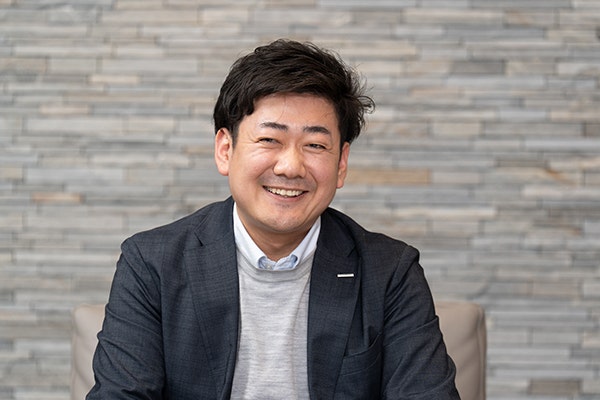
When listening to speeches on environmental issues, Kazumi Muto, who was General Manager of Environmental and External Technology at Asahi Kasei Homes at the time, felt deeply moved by the passion of speakers who were genuinely concerned for the future of the earth. “As a father, I want to pass down to the next generation a future I can be proud of,” he says. Asahi Kasei Homes had set a target of ¥1 trillion in sales, and Muto believed that true growth required stronger contributions to society.
Around 2018, he began considering a new sustainability initiative based on changing circumstances and the company’s characteristics. Energy markets in Japan were in flux due to liberalization of the retail power market. RE100, the initiative calling for 100% renewable electricity in corporate operations, caught Muto’s attention. He proposed to senior management that Asahi Kasei Homes join RE100, and presented a plan to achieve it.
An evolving vision and the project that took shape##section-2
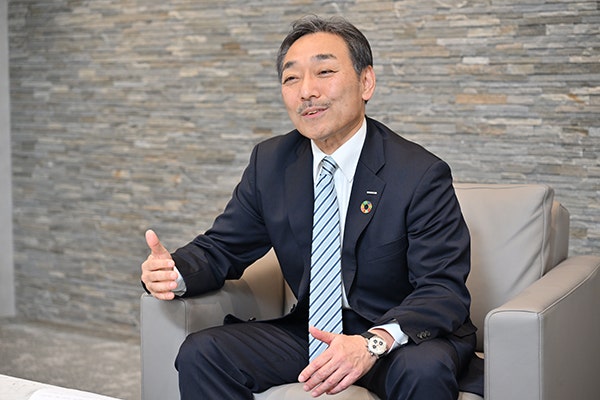
But the response from management was not encouraging. While no one questioned the value of contributing to the global environment, the housing business had a deeply rooted culture of putting customers first. Unless there were clear benefits for customers, the initiative would not be prioritized. Three months later, Muto tried again with a proposal in terms of mitigating business risks associated with decarbonization. Once again, approval was not forthcoming. “Why can’t they see the importance of this?” Muto began to feel frustrated.
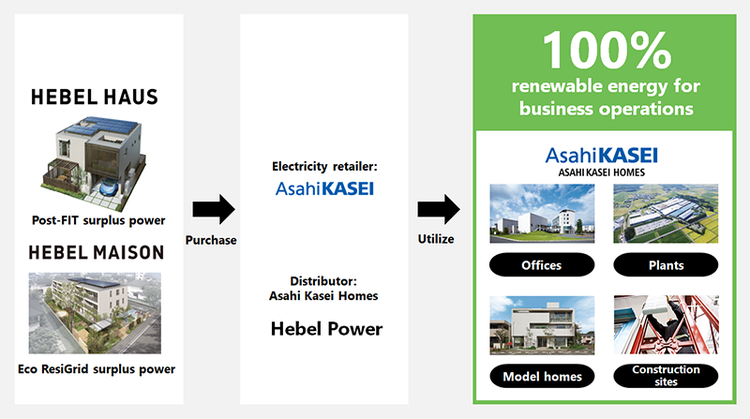
All along, global concern over climate change continued to grow, with record-breaking heatwaves, severe rainstorms, and climate-related protests. In Japan, increasing numbers of households were reaching the end of their fixed-price renewable energy purchase contracts under the Feed-in Tariff (FIT) system, a government-subsidized program to promote adoption of renewable energy. Many companies began announcing programs to address this “post-FIT” market. Seeing this momentum, Muto focused on customers who had installed solar panels on their Hebel Haus and Hebel Maison homes. He proposed a plan to purchase surplus solar power from these customers to enhance customer satisfaction, while using the collected renewable electricity to support the company’s path toward RE100. Following multiple discussions and careful evaluations, the proposal was finally approved. Muto’s long-held vision was going into motion.
The first step was to partner with the parent company, Asahi Kasei Corp., which already held a retail electricity business license. Together, they launched a new power-supply service called Hebel Power. By creating a fully integrated system within the Asahi Kasei Group, they built a unique service platform delivering both low costs and high performance. In September 2019, Asahi Kasei Homes announced both its participation in RE100 and the start of post-FIT solar power purchasing through Hebel Power. This marked the beginning of a new sustainability initiative for Asahi Kasei Homes.
The challenges standing in the way##section-3
To supply 100% renewable electricity for the operations of Asahi Kasei Homes and its group companies in the housing business, two major initiatives were required. The first was to encourage Hebel Haus and Hebel Maison customers with solar panels reaching the end of their FIT period to choose Hebel Power as the buyer of their surplus electricity. The second was to expand the installation of solar panels, not only on newly built Hebel Haus and Hebel Maison homes, but also on previously built homes without solar panels. This would create the foundation needed to increase the volume of renewable electricity purchased. By estimating the rate of customer transition to Hebel Power and the installation rate of solar panels, Asahi Kasei Homes set 2038 as the target year for achieving RE100.
To achieve the RE100 target, the entire housing business needed to move forward as one. But it wasn’t easy to gain understanding across the organization. A major reason was the gap between environmental awareness and the practical priorities of daily work. The company was full of experts in housing, but few who had extensive knowledge of highly complex environmental issues. To confidently explain the initiatives to customers and respond to their questions, employees would need to spend significant time training and studying. What’s more, customer interactions were already time-constrained. Every conversation with a customer was precious. Purchasing a home is a major life decision, and there were countless topics to discuss; listening carefully to needs, confirming details, presenting proposals. Many believed there was little room to discuss environmental subjects during such a critical process. Then came the COVID-19 pandemic. Suddenly, each sales office had to focus on transforming work practices and developing new customer-engagement methods. Advancing the new sustainability initiative became even more difficult.
Bridging the gap between management strategy and real-world sites##section-4
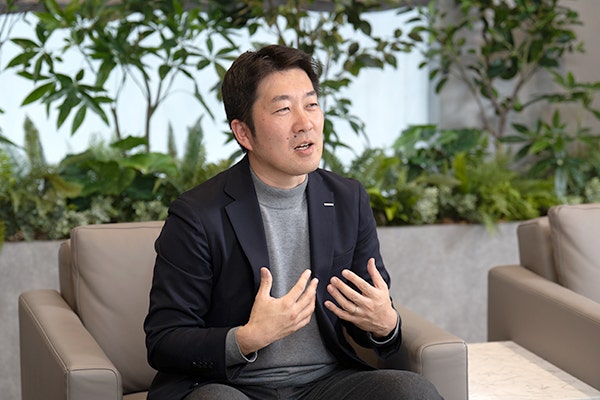
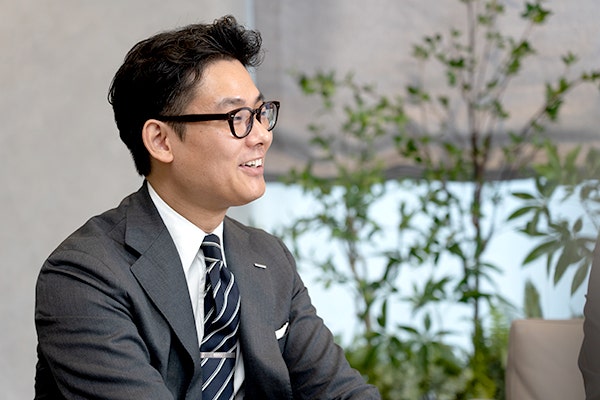
Despite these challenges, something began to shift. Across society, awareness of decarbonization was rising at an unprecedented pace. The Japanese government’s “2050 Carbon Neutral Declaration” became a turning point, sparking a wave of corporate action throughout the country. In April 2022, Asahi Kasei Homes established a Sustainability Planning and Promotion Department, positioning sustainability as one of the core pillars of its management strategy. Leveraging this shift, Muto began exploring ways to deepen understanding of environmental initiatives across all sites. Working with him was Ryu Yokota from the Housing Business Marketing Division. By collaborating with Yokota, who designs a wide range of marketing materials and distributes them to the salesforce, they worked to strengthen awareness and understanding of sustainability and RE100 throughout the organization. Yokota also dealt with sustainable product offerings such as ZEH-M1 (Net Zero Energy House-Mansion) and Eco ResiGrid2, making him the ideal partner for this initiative.
Working together, Yokota and members of the Sustainability Planning and Promotion Department organized training sessions across 12 sales offices. During these sessions, Yokota avoided too much emphasis on RE100 or sustainability jargon. “We made an effort to use simple terms and focus on customer benefits,” Yokota explains. “By framing ZEH-M, solar panels, and storage batteries as solutions that enhance customers’ lives and deliver real value, we believed it would ultimately lead to greater adoption of renewable energy, higher electricity-purchase volumes, and over time, meaningful contributions to decarbonization and increased corporate value.” Although deepening understanding of environmental initiatives was not easy, the message gradually and steadily permeated the organization.
The key that ultimately connected “for our customers” with “for the world” was the “Long Life” vision of Asahi Kasei Homes, representing its commitment to supporting “life, living, and lifestyles” over the long term. Installing solar panels and storage batteries contributes directly to building homes where residents can feel secure, even in the event of a disaster. And by choosing Hebel Power, customers can enhance the quality of their everyday lives. Takanori Aoki, who calls on customers to make renovation proposals, is one of the employees advancing this initiative with the spirit of Long Life at heart. “I work every day with the desire to provide our customers with the ultimate sense of security in their homes,” he says. “Especially in the event of a disaster, I want them to be able to live safely and comfortably. That’s why I’ve continued proposing solar panels and storage batteries. Knowing that these choices also contribute to the global environment, together with our customers, is genuinely satisfying.”
The trust of customers: The decisive factor behind achieving the goal 15 years early##section-5
By expanding the installation of solar panels, promoting ZEH and ZEH-M, and advancing Eco ResiGrid, Asahi Kasei Homes built a foundation for generating renewable electricity and maintaining it even after achieving RE100. At the same time, the company focused its efforts on purchasing electricity from customers whose FIT period had expired. When they recommended Hebel Power, the number of contracts far exceeded expectations. As a result, the company reached RE100 in 2023, fifteen years earlier than originally planned, becoming the first home builder in Japan to achieve this milestone.
Why was RE100 achieved so much earlier than expected? A clue can be found in the words of Takumi Oshiba, in charge of selling newly-built unit homes. “At our company, even after a home is built, the salesperson continues to stay in touch with customers through letters, emails, and phone calls. Asahi Kasei Reform also provides a wide range of ongoing support. Because our customers share and value the concept of Long Life, we are able to build a truly special, long-term relationship with them.”
Muto also expressed deep appreciation, not only for his colleagues and customers, but for those who had come before him. “I’m grateful to everyone in the Asahi Kasei Group who supported the launch and operation of Hebel Power. And above all, to the many predecessors who built the strong relationships of trust we have with our customers today. Thanks to that foundation, we were able to achieve RE100 far earlier than expected. To me, the true value of this initiative lies in accomplishing it together with our customers, and this achievement reflects who we are as a group. Had even one element been missing, we could never have reached this milestone so quickly. I’m sincerely thankful to everyone involved.” There were certainly other, faster ways to achieve RE100. But instead of choosing a quick way, Muto envisioned and realized a path grounded in the Long Life philosophy: Building a sustainable initiative together with colleagues and customers, in a way that would endure.
Asahi Kasei Homes received an Enterprising Leader Award in 2024, followed by a Changemaker Award in 2025, at the RE100 Leadership Awards. Their achievements have been recognized not only for the results they had accomplished, but also for the vision and the journey that led them there.
Building a future where everyone can thrive##section-6
As more and more renewable electricity flows in from customers, a new question has arisen: How can we use this clean energy to its fullest potential? In the fall of 2025, the company introduced a groundbreaking new product called “earth-tect.” By harnessing renewable electricity generated from Hebel Haus homes, this new service was launched with the aim of reducing cumulative 60-year CO2 emissions to net zero. This spans construction, use, renovation, and even demolition. And the effort does not stop at housing. By applying this renewable energy across different plants and facilities within the Asahi Kasei Group and its suppliers, the initiative is contributing to decarbonization across the entire supply chain.
Sustainability is about more than just decarbonization. Looking ahead, Muto shares his thoughts on the future: “Through both the process and the outcome of achieving RE100, awareness of sustainability within our housing business has gradually increased. At the same time, we are still only at the beginning. To us, sustainability means balancing the needs of the present with those of the future. We want to continue contributing to sustainability in a variety of ways that help everyone involved feel hopeful and positive.” The efforts to contribute to the world’s own Long Life will continue to grow, always aiming for a future where everyone can thrive.