


Biodiversity
Policy
The Asahi Kasei Group is committed to reducing the impact of its business activities on biodiversity and ensuring the sustainable use of natural capital. These efforts are also vital from the perspectives of contributing to decarbonization and a circular economy. Recognizing consideration for “biodiversity” as one of the Asahi Kasei Group’s materiality issues, we strive to raise employee awareness through environmental and safety education, while advancing a wide range of initiatives.
Guidelines for the biodiversity conservation
The Asahi Kasei Group has established guidelines for the biodiversity conservation as the foundation for its biodiversity initiatives. The guidelines cover such aspects as identifying and addressing the relationship between business activities and biodiversity, compliance with relevant laws and regulations, collaboration with local communities, greening within business sites, and biodiversity education for employees. The guidelines are revised as necessary to reflect evolving social expectations and to further enhance our initiatives.
Certification as a Nationally Certified Sustainably Managed Natural Site
In support of the 30by301 target, the Asahi Kasei Group has joined the 30by30 Alliance for Biodiversity, established in April 2022, to promote the certification of corporate green spaces and other conserved areas as OECMs2. In the first half of fiscal 2023, Asahi Woods of Life in Fuji City, Shizuoka Prefecture, was certified as a Nationally Certified Sustainably Managed Natural Site3, followed by Moribio (Moriyama Biotope) in Moriyama City, Shiga Prefecture, in the first half of fiscal 2025.

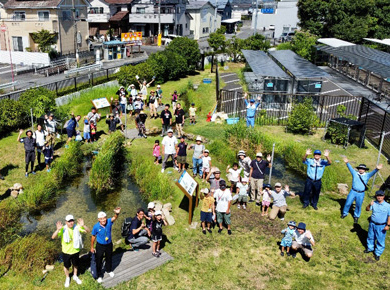 Moribio, certified as a Nationally Certified Sustainably Managed Natural Site
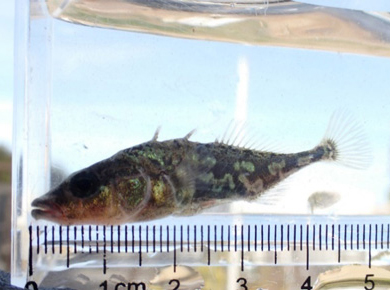 The smallhead stickleback inhabiting Moribio
- 1The 30by30 Alliance is an initiative for halting and reversing biodiversity loss to put nature on a path to recovery (nature-positive) by 2030 while effectively conserving at least 30% of land and sea areas as healthy ecosystems by 2030.
- 2Other Effective area-based Conservation Measures is a designation for areas that contribute to conservation of biodiversity outside of protected areas.
- 3A Nationally Certified Sustainably Managed Natural Site is a system launched in fiscal 2023 by the Ministry of the Environment of Japan to certify areas where biodiversity is conserved with the support of local communities, etc. As of fiscal 2024, 328 sites nationwide, including Asahi Woods of Life, have been certified.
Biodiversity initiatives in procurement
The Asahi Kasei Group promotes biodiversity conservation throughout its supply chain. Our Supplier Code of Conduct includes provisions requiring suppliers to identify the impact of their business activities on ecosystems and to make efforts to protect biodiversity. In addition, our annual CSR Procurement Questionnaire for suppliers includes questions on biodiversity initiatives and corrective mechanisms, enabling us to monitor their progress.
Group-wide activities for biodiversity conservation
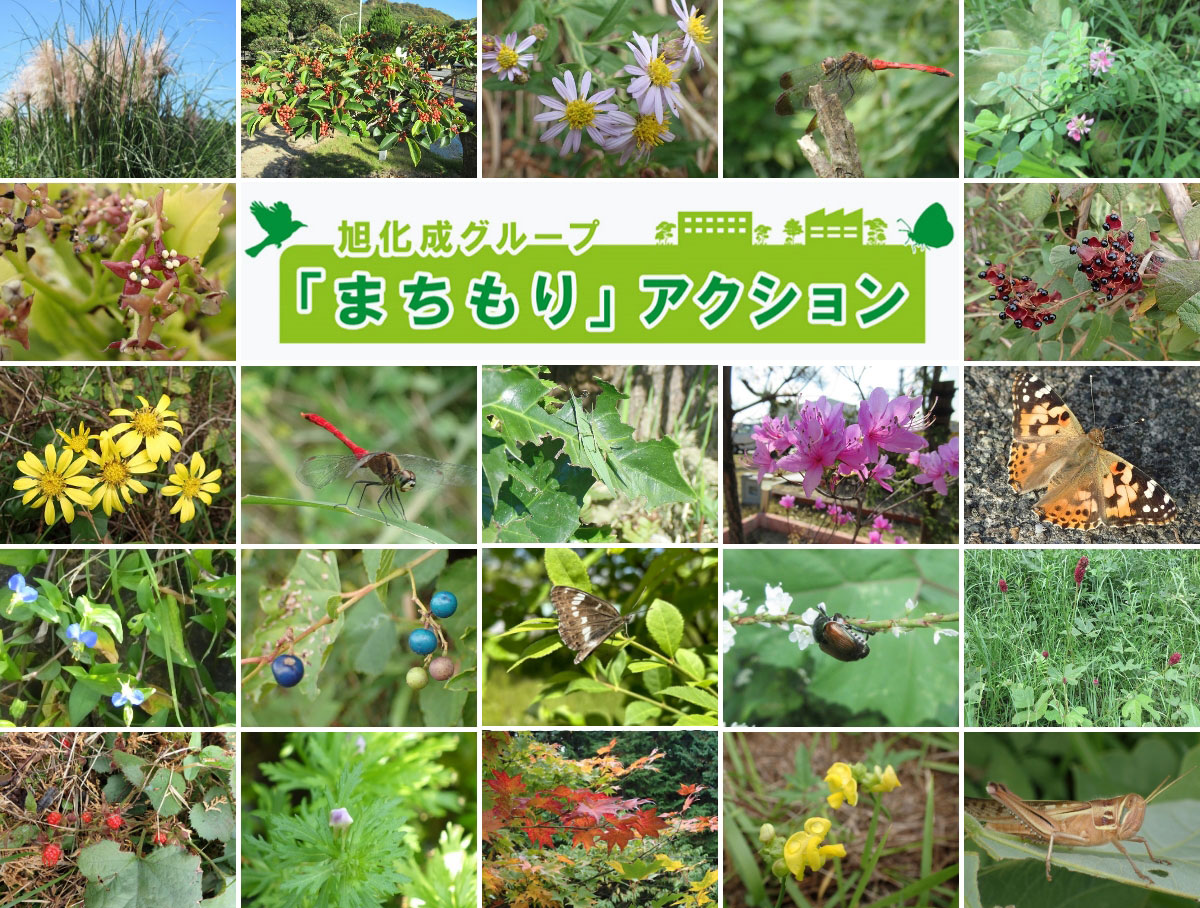
What is the "Town Woods" Program?
We aim to increase value from the perspective of biodiversity while enhancing green spaces at Asahi Kasei Group operating sites in Japan. We will use Town Woods Pots as a tool to heighten understanding and awareness of the value of biodiversity among personnel.
What are Town Woods Pots?
This new way of landscaping by Asahi Kasei Homes combines four layers of vegetation of varying heights: Tall, medium, short, and groundcover. While compact enough to integrate with urban residential areas, they increase the space for other plants and wildlife in artificial environments that otherwise have little greenery. Our Town Woods Program uses the phytosociological method to classify green spaces at operating sites throughout Japan, selecting the most suitable regional vegetation when creating the Town Woods plantings.
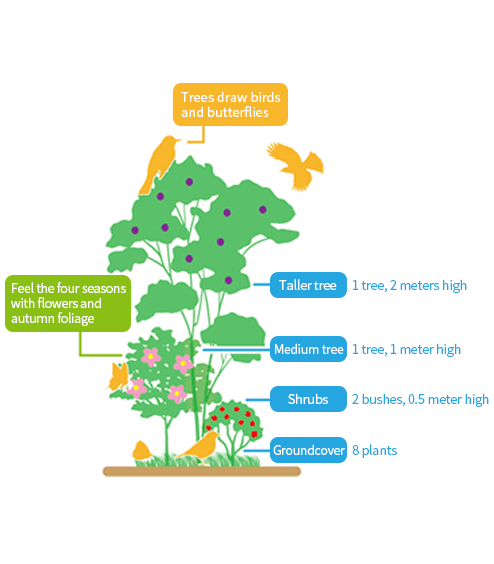
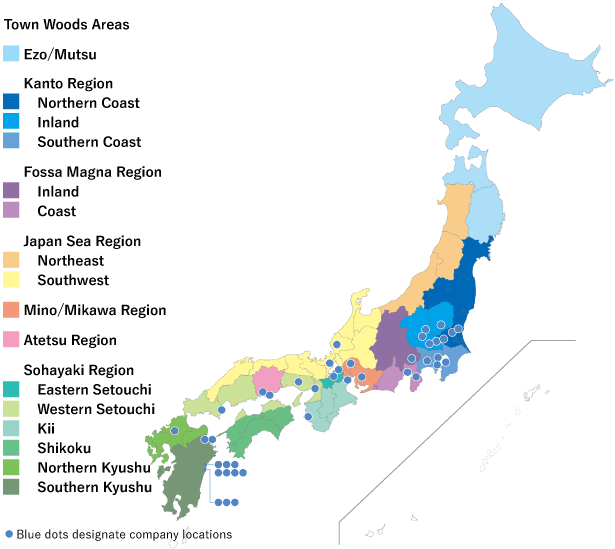
| Stage | Example Initiatives |
|---|---|
| Stage 1: Installation |
|
| Stage 2: Observation |
|
| Stage 3: Dissemination |
|
| Stage 4: Development Initiatives in other locations |
|
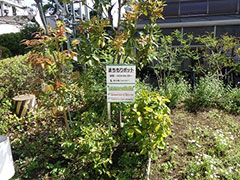
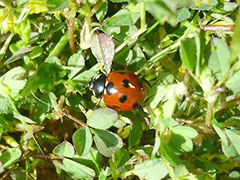
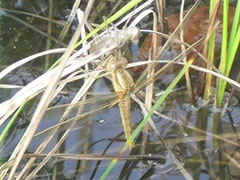
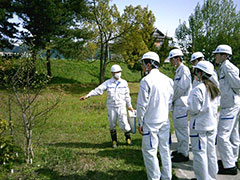
Notable activities in fiscal 2024
Actions in the Fuji area
Biodiversity conservation activities in collaboration with Fuji City and local stakeholders
The Asahi Woods of Life biotope, located on the premises of the Fuji Office, was recognized in March 2025 under the SEGES Green Certification System operated by the Organization for Landscape and Urban Green Infrastructure, earning the Superlative Stage certification of Social and Environmental Green Evaluation System (SEGES). The biodiversity conservation activities at Asahi Woods of Life are conducted jointly with Fuji City and other local stakeholders.
- 1.Town Woods activities
Since 2020, Asahi Kasei Homes and Tokoha University have been conducting joint research using Asahi Woods of Life as a test field to verify the restoration of local vegetation. The research focuses on solving local environmental issues such as oak wilt, deer grazing damage, and wetland desiccation. - 2.Black-spotted frog protection activities
This is a joint initiative between the Fuji Office and Fuji City’s Environmental Protection Division. The black-spotted frog is endangered in Fuji City, and efforts are underway to protect it at the Asahi Woods of Life rice paddies. Each spring, egg clutches laid in the paddies are carefully collected early to protect them from predators and reared safely. In collaboration with a local eco-activity group, a release site was prepared in the Ukishimagahara Nature Park wetland, where a juvenile frog release event was held. This project, involving cooperation among citizen groups, companies, and the local government, was well received as a significant step toward conserving Fuji City’s biodiversity. - 3.Biodiversity monitoring training
A Geographic Information System (GIS) can be used to record and manage biological species and populations. The Fuji Office has actively introduced GIS and organized training sessions inviting representatives from Fuji City Hall, universities, and local eco-activity groups to learn about its application, contributing to local community engagement. Biodiversity conservationists using GIS expressed surprise at such a comprehensive corporate-led activity, which greatly increased the recognition of Asahi Woods of Life. - 4.FY2024 Shizuoka Prefecture biodiversity seminar (on-site tour)
Asahi Woods of Life was selected as a site for the on-site tour course of the OECM seminar hosted by Shizuoka Prefecture. More than 30 participants, mainly from companies and organizations, attended and showed strong interest in learning about the biotope’s role in regional contribution activities. - 5.Fuji Office firefly festival
This local contribution activity has continued since 2009. Firefly larvae raised at the Fuji Office are released into the waterways of Asahi Woods of Life, where they mature and take flight. In 2024, participation was limited to employees, their families, Fuji City representatives, and invited companies, yet the event attracted around 750 attendees and was a great success.
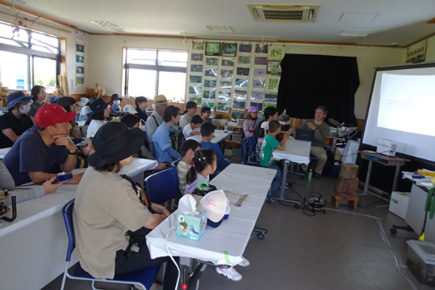 Explanation before releasing black-spotted frogs
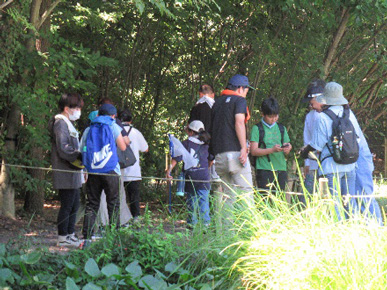 GIS hands-on training session
Actions in the Moriyama Area
Ex-situ conservation of smallhead stickleback, an endangered freshwater fish, and joint effort among companies and communities for dragonfly conservation
In Moriyama, we draw groundwater for industrial use in cooling equipment. Its quality is strictly monitored, and it is discharged to nearby rivers after use. A portion of the discharged water from our Moriyama Works is also used for agriculture, which has become vital for local farmers as well as wildlife inhabiting the waterfront areas. Against this backdrop, and since water is intrinsically related to our business operations, in fiscal 2010 we started initiatives to protect biodiversity with a focus on water resources.
In fiscal 2015, we began ex-situ conservation of smallhead stickleback, an endangered freshwater fish, and in fiscal 2016, we began dragonfly conservation activities in cooperation with companies that have operations located in Shiga Prefecture and local communities.
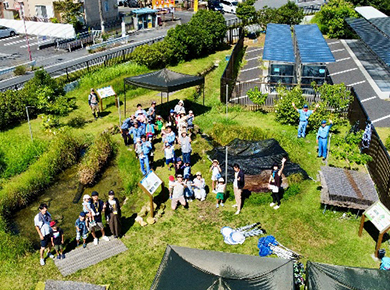
In fiscal 2024, we held an observation event at the biotope (Moribio) for employees and their families, gathering 41 participants. Thanks to the support of experts, the observation sessions provided a good opportunity to learn about biodiversity conservation while having fun by observing smallhead sticklebacks and dragonflies living in the biotope, and creating a container biotope for dragonflies. After the observation session, a lunch gathering was held where participants shared stories about dragonflies and smallhead sticklebacks.
The Biodiversity Biwako Network (BBN)—a group of five companies with operations in Shiga Prefecture—conducts surveys and conservation activities on dragonfly habitats in collaboration with local communities. Each company decides on a dragonfly to be promoted for conservation. Asahi Kasei has chosen the Sympetrum kunckeli, a dragonfly that inhabits wetlands, and continues conservation of this species in the biotope on-site. In fiscal 2024, adult Sympetrum kunckeli were confirmed at the Moriyama Works, demonstrating tangible results from these efforts. BBN also promotes awareness through exhibitions and events at the Lake Biwa Museum, helping local residents learn about the importance of biodiversity conservation.
In addition to activities through BBN, we also collaborate with Moriyama City to carry out dragonfly conservation and observation events in the nearby Biwako Forest of Global Citizens. We will continue to work on biodiversity conservation through our activities at the Moribio and the BBN.
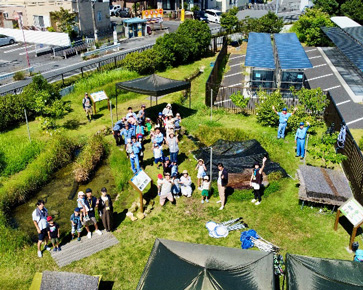 Observing wildlife at the Moribio
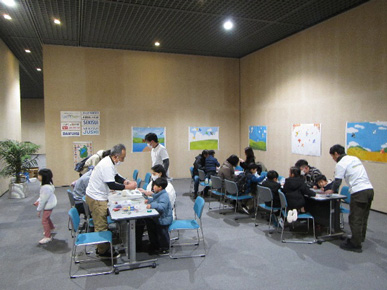 Dragonfly figure-making activity at the Lake Biwa Museum
Actions by Asahi Kasei Jyuko Co., Ltd.
Project to rediscover living with the woods and water in Higashiomi
We are carrying out conservation works at Asahi Kasei Jyuko Co., Ltd.’s Shiga Plant—principally at the “Yuya Hebel Biotope” created on the plant’s grounds in June 2017—in aid of the four-spotted skimmer (selected as our “dragonfly to be promoted for conservation”), a species listed on Shiga Prefecture’s Red Data Book and which surveys of dragonflies in the surrounding area show to be at risk of extinction due to habitat degradation in recent years.
In March 2025, under the guidance of experts, the plant conducted pond maintenance for the first time in five years, removing reeds, cattail roots, accumulated mud, and fallen leaves from the pond, followed by a period of sun drying.
During the rescue of aquatic life hiding in the mud and debris, 171 individuals from 16 species were confirmed, including the giant water bug and several species of dragonfly larvae, as well as the wrinkled frog—both listed in Shiga Prefecture’s Red Data Book.
In addition, during the Asahi Kasei Jyuko Autumn Festival—an annual event held at the Shiga Plant for local residents, business partners, and employees’ families—an observation session was held at the Yuya Hebel Biotope for the first time in five years since the COVID-19 pandemic. With explanations from experts, participants observed aquatic and insect life such as water scorpions, black-spotted frogs, and various dragonflies, while learning about the company’s ongoing biodiversity conservation activities in an enjoyable way.
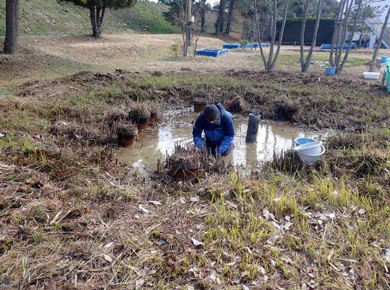 Pond maintenance work
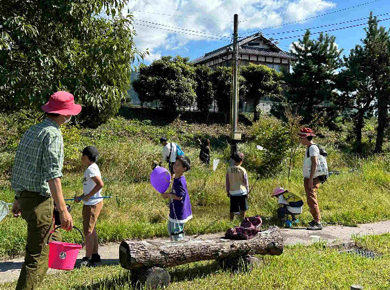 Observation at the “Yuya Hebel Biotope”
Actions in the Suzuka Area
Actions in the Suzuka Area A river known as River No. 19 cuts through the grounds of our Suzuka Works from north to south, and water used for cooling and other purposes in the production line is discharged into this river under water-quality monitoring. Although the river is narrow, it supports maintain a favorable environment for aquatic plants and organisms, by carefully protecting the old stone embankment. Around these cobblestone pavements and in the crevices, plants such as Limnophila sessiliflora grow, crabs inhabit, and various small fish including the pale chub swim in the river water, as dragonflies and butterflies visit the waterside. In the early morning when there are few people around, birds such as ducks, great blue herons, and egrets can be seen flying in and resting.
This year, white and red carp were also spotted swimming upstream, delighting everyone.
The number of soft-shelled turtles, which have lived in the area for a long time, has increased to five, and they can sometimes be seen swimming with large movements of their arms and legs. The adult turtles have grown noticeably larger, much to everyone’s surprise.
Employees look forward to seeing what kind of creatures they may find when walking by the river. Every time various creatures are found, we realize how important it is to maintain the riparian environment of River No. 19, home to many aquatic organisms. We will steadily conserve the cobblestone revetment and continue to ensure water quality control of the discharge water to conserve the environment so that these aquatic organisms can live peacefully.
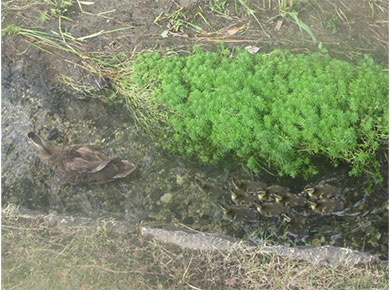 Ducks swimming by the Limnophila sessiliflora in River No. 19
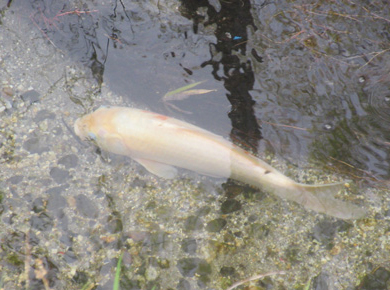 White carp swimming upstream in River No. 19
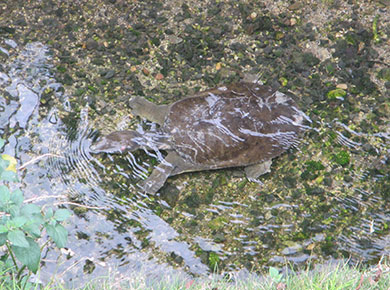 Adult soft-shelled turtle swimming in River No. 19
Actions in Nobeoka and Hyuga Area
Since 2007, the Nobeoka Office has participated in a reforestation program led by Miyazaki prefecture to create forests in cooperation with companies. Under this program, Asahi Kasei has worked to conserve the environment by planting broad-leaf trees and other trees across approximately 50 hectares of forested land in the prefecture. In the past, as many as 400 people took part in these tree-planting activities, but because of the pandemic they were temporarily suspended. However, the event resumed in fiscal 2022 with the number of participants limited to approximately 150 people. In fiscal 2024, tree planting was conducted in the Hinokage Town Water Source Conservation Forest Area, where about 150 participants, including Asahi Kasei Group employees and members of the retirees’ association, planted 1,500 broadleaf saplings under the guidance of the local forestry cooperative.
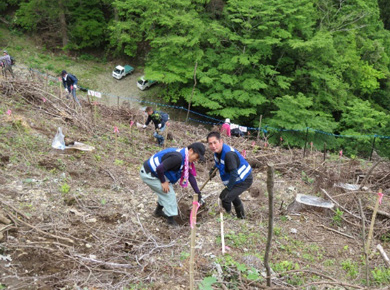 Planting trees
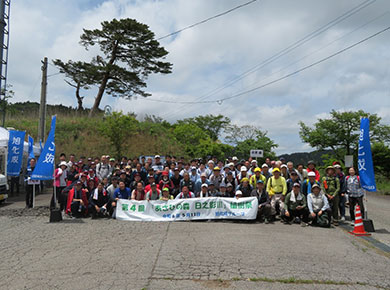 Commemorative photo after tree planting session
Our awareness of natural capital
In 1922 Asahi Kasei began using water from Lake Biwa for the manufacture of fibers, and in 1923 began manufacturing synthetic ammonia in Nobeoka using hydroelectric power generated with the area’s abundant water resources. Water is indispensable to our manufacturing operations, and our growth has been supported by the benefits of water. In recent years, however, climate change and the loss of biodiversity have been accelerating, heightening society’s awareness of environmental challenges. Companies are now expected to demonstrate a more proactive stance and take responsible action toward the conservation and restoration of natural capital. Against this backdrop, we recognize the importance of clarifying how our business activities depend on and impact natural capital, and have begun related analyses. Going forward, we will apply the insights gained from these analyses to strengthen management practices that give due consideration to natural capital, further advancing our efforts to achieve both contributing to sustainable society and sustainable growth of corporate value.
Analysis based on the LEAP approach1
In analyzing our dependencies and impacts on natural capital, Asahi Kasei adopted the LEAP approach recommended by the Taskforce on Nature-related Financial Disclosures (TNFD)2. We prioritized and narrowed down the scope of evaluation by considering the following factors, designating Asahi Kasei Corporation (domestic sites) as the focus of analysis and setting the Material sector as the target business sector:
- Sites and businesses that constitute core parts of the overall configuration of the Asahi Kasei Group
- Presence of many large-scale manufacturing facilities
- Operations expected to have significant dependence on and impact related to natural resources
- 1LEAP approachAn analytical framework proposed by TNFD for organizing a company’s dependencies, impacts, opportunities, and risks related to natural capital across four stages: Locate, Evaluate, Assess, and Prepare.
- 2TNFDTask Force on Nature-related Financial Disclosures. An international initiative established in 2021 to develop a framework for companies to manage and disclose risks related to natural capital and nature-related issues.
Analysis by manufacturing site
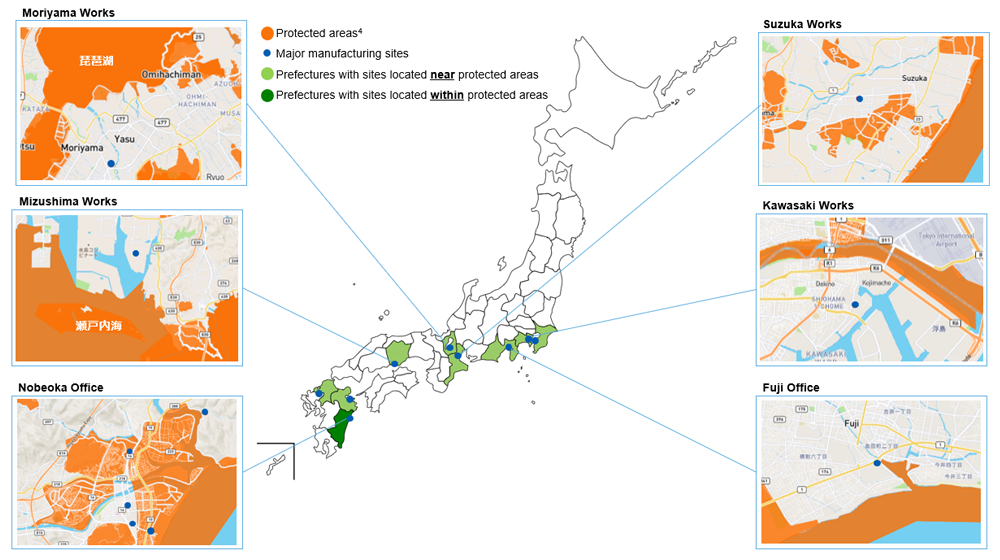
As part of our analysis based on the LEAP approach, we used tools such as the Integrated Biodiversity Assessment Tool (IBAT)3, developed by the International Union for Conservation of Nature and Natural Resources (IUCN) and other organizations, to assess whether Asahi Kasei’s major domestic manufacturing sites are located within or near nature conservation areas, key biodiversity areas, or regions with high water stress. The analysis confirmed that none of the sites assessed are located on land considered critical to ecosystems, such as habitats of endangered species, nor within areas subject to strict legal protection, and that no sites are situated in regions with high water stress.
At the same time, we reaffirmed that many of our manufacturing sites are located in or near areas rich in natural environments, underscoring the importance of utilizing these natural blessings appropriately while ensuring strict compliance with environmental regulations.
Below are excerpts from the IBAT assessment results.
- 3IBATIntegrated Biodiversity Assessment Tool. A tool for assessing the potential impact of business operations or development plans on biodiversity.
- 4Protected areasLegally or institutionally designated zones established to conserve natural environments and wildlife, such as national parks and nature reserves, where development and use are restricted.
Analysis by business activity
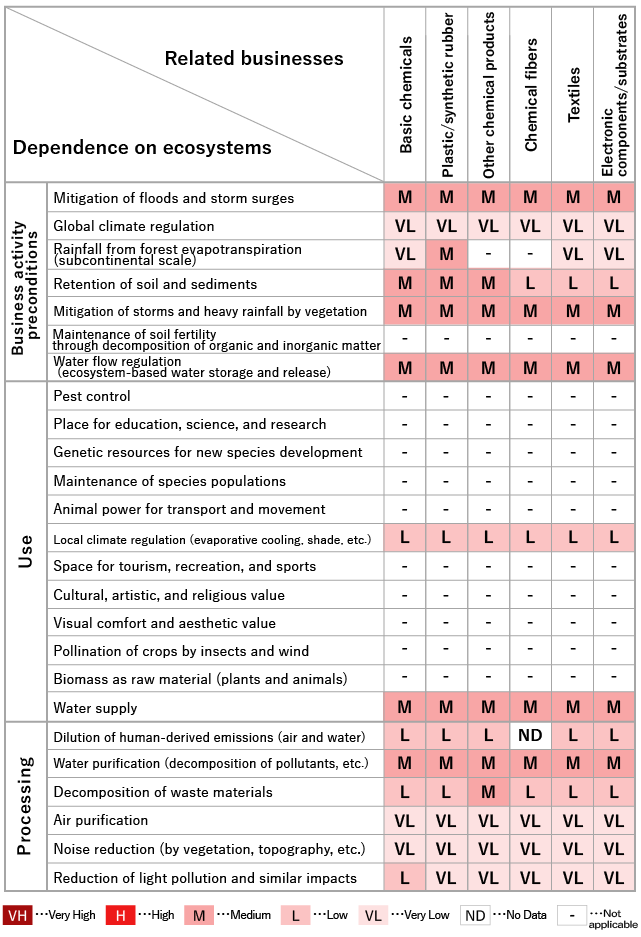
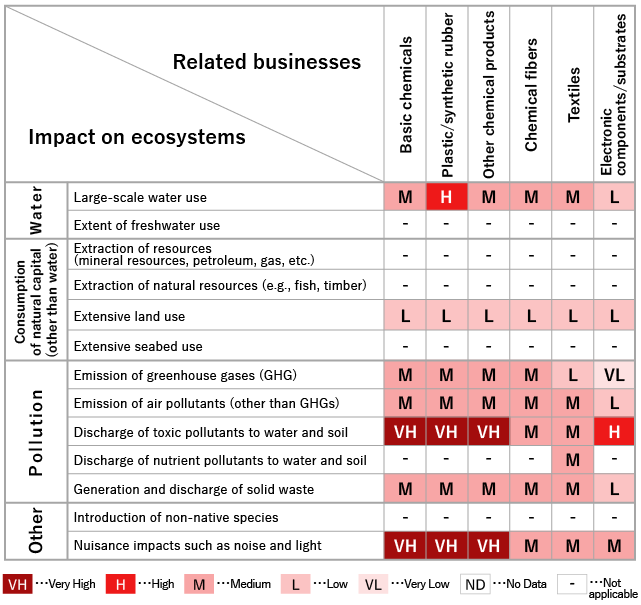
For our business activities, we used ENCORE5, a tool managed and operated by Global Canopy, the UN Environment Programme Finance Initiative (UNEP FI), and the UN Environment Programme World Conservation Monitoring Centre (UNEP-WCMC), to organize and assess the degree of our business dependence on and impact on nature.
The results showed that our business operations are broadly dependent on ecosystem functions to ensure stable operations, particularly on water use and wastewater treatment within manufacturing processes. The analysis also revealed that the sustainable management of water resources and the reduction of environmental impacts caused by air and water pollutants are key issues in addressing our impacts on natural capital.
Water is a critical resource forming the foundation of our business, and its proper management is essential for stable operations. Minimizing environmental impacts from emissions is equally important. In addition to complying with all relevant laws and regulations, Asahi Kasei will continue to advance voluntary initiatives to further improve environmental performance.
-
Dependence
-
Impact
- 5ENCOREExploring Natural Capital Opportunities, Risks and Exposure. A tool designed to help organizations assess their exposure and sensitivity to nature-related risks, and to understand their dependencies and impacts on natural capital.
Findings from the evaluation
Based on the evaluation results of both our sites and business activities, we confirmed the importance of paying close attention to natural capital conservation at each location—particularly given that many sites are situated in or near areas rich in natural environments, and in light of the need for careful water resource management and pollution prevention. At each site, we recognize that in addition to complying with relevant environmental laws and regulations, it is vital to enhance environmental awareness and promote coexistence with local communities through voluntary initiatives tailored to local environmental characteristics. Through these various region-specific activities, Asahi Kasei will continue striving to achieve both the conservation of local biodiversity and the sustainable use of natural capital.
Sites with large-scale operations and greater potential impact on nature
Sites such as the Nobeoka Office and the Mizushima Works are located near natural environments including forests and coastal areas, and due to the large scale of their operations, they are considered to have relatively greater potential impacts on nature. At these sites, Asahi Kasei not only ensures full compliance with environmental laws and regulations, but also implements measures to manage wastewater and pollutant emissions with due consideration for the natural environment. In addition, the following initiatives are being undertaken to contribute to the restoration of nature.
- Nobeoka Office Initiatives:
Promotion of forest conservation and regeneration through tree-planting activities 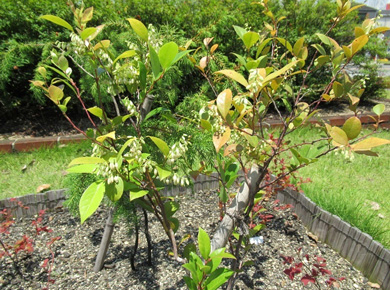 Mizushima Works Initiatives:
Promotion of urban greening and biodiversity conservation through the Town Woods6 program
- 6Town WoodsAn Asahi Kasei Group initiative aimed at enhancing the value of green spaces at business sites and raising awareness of biodiversity conservation. The program uses the Town Woods Pots, developed by Asahi Kasei Homes, which allow layered vegetation structures to be created even in small spaces, enabling site-specific planting suited to local environments.
Sites located near important nature conservation areas
Most of Asahi Kasei’s major manufacturing sites are located in or near nature reserves, making it essential that all business operations at these sites are conducted with full consideration for the surrounding natural environment. Among these, Lake Biwa is particularly important from a conservation standpoint, as it serves both as a vital resource for human life and as a diverse habitat for aquatic plants and animals. Because the Moriyama Works is located close to Lake Biwa and its tributaries, special attention to environmental stewardship is required. At this site, in addition to complying with environmental laws and regulations and properly managing all discharges, Asahi Kasei actively carries out the following initiatives.
 Moriyama Works Initiatives:
Promotion of biodiversity conservation activities and the reuse of all water used at the facility
Other sites
We recognize that our other sites also have various connections with natural capital. Accordingly, in addition to addressing the major dependencies and impacts identified in this analysis—such as water use and pollution—we are advancing initiatives that include recognizing and preparing for flood risks associated with extreme weather events, as well as promoting biodiversity conservation activities that emphasize the importance of nature’s benefits. Among these, the Fuji Office is particularly focused on natural capital conservation through the management and operation of the Asahi Woods of Life, in collaboration with Asahi Kasei Homes. Specific activities include tree-planting events conducted together with local residents, firefly observation gatherings, and rice-harvesting events in the on-site paddy fields. These initiatives play a symbolic and significant role in Asahi Kasei’s natural capital–related efforts.
For more details on our biodiversity conservation activities, please refer to:
Opportunities and risks
Asahi Kasei recognizes and analyzes key opportunities and risks related to natural capital and aims to proactively seize opportunities while effectively managing and controlling associated risks. The diagram below summarizes the main natural capital–related opportunities and risks across the different stages of our business activities — upstream (raw material extraction ), direct operations (production and development), and downstream (product use and disposal). Going forward, we will further deepen our analysis to identify and advance initiatives that both manage our dependencies and impacts on natural capital and contribute to enhancing corporate value.
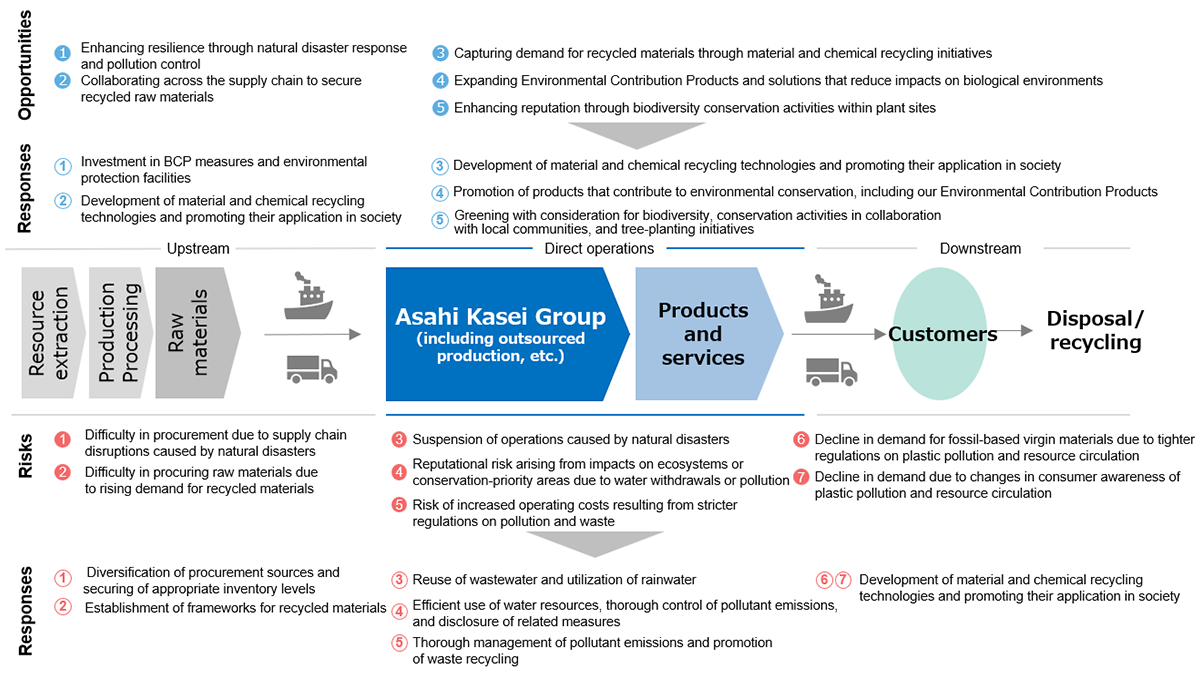
Examples of response implementation
| Responses | Examples of response implementation | |
|---|---|---|
| Opportunities | 1) Investment in BCP measures and environmental protection facilities | |
| 2) and 3) Development of material/chemical recycling technologies and furthering their rollout in society | ||
| 4) Promotion of products that contribute to environmental conservation, including our Environmental Contribution Products | ||
| 5) Greening with consideration for biodiversity, conservation activities in collaboration with local communities, and tree-planting initiatives | ||
| Risks | 1) Diversification of procurement sources and securing of appropriate inventory levels | Ongoing review of BCP measures |
| 2) Establishment of frameworks for procuring recycled materials | - | |
| 3) Reuse of wastewater and utilization of rainwater | ||
| 4) Efficient use of water resources, thorough control of pollutant emissions, and disclosure of related measures | ||
| 5) Thorough management of pollutant emissions and promotion of waste recycling | ||
| 6) and 7) Development of material/chemical recycling technologies and furthering their rollout in society |
Future policy
As society’s awareness of issues related to natural capital continues to grow, Asahi Kasei believes that accurately understanding our dependencies and impacts on natural capital, and conducting responsible business activities, are essential for creating sustainable corporate value. Going forward, we will continue to deepen our understanding of our relationship with nature, while advancing initiatives aimed at appropriately managing risks and impacts, and creating new opportunities.